Workers Deserve More
The world is in chaos, but for the bosses, it’s all going according to plan. We can see their plan in the countless heartbreaking images coming out of war zones like Beirut, Gaza, and Tehran. We can hear it in the rumble of bulldozers making way to build detention camps and data centers. We can feel it in the air as the summer heat becomes unbearable, and in the pits of our stomachs when faced with the price of gas and rent. We’re promised magical technology with AI, but in reality, the bosses lay us off and track our every move. The billionaire class is dividing workers against each other, and it’s making us desperate and miserable.
The political and economic system under which we live is built on private ownership and profit at all costs. As capitalism fails to solve problems of its own making, it turns to right-wing authoritarianism. Big business makes deals with the government to line their pockets, and politicians stoke hatred between working people. Instead of offering real solutions to unemployment and the cost of living, they attack immigrants, communities of color, and trans people. Rather than fixing our broken healthcare system, they push snake oil and circulate conspiracy theories. The Republicans are in on it, the Democratic Party is asleep at the wheel, and both are funded by the same criminal class of billionaires and war profiteers.
Democratic socialists know that no one has to live like this. If we lived in a classless society and governed ourselves, we could freely build a world without war or poverty. We could build a world where no one suffers for their race, gender, or religion, and everyone is free, equal, and cared for. Building this world is the guiding star of our movement. When we labor for our common good instead of private profit, we can all have a secure and dignified life, and use our time and talents how we wish.
To achieve this future, our class must organize. The Democratic Socialists of America is building a party whose goal is a democratic society of the working class. Our enemies are not just individual bosses, but the entire global system of capital; not just this or that cop, judge, or president, but the entire anti-democratic structure of our society. We are workers fighting to transform society: to win the battle for democracy, draft a new constitution, and create a democratic socialist republic.
DSA has written this program for ending capitalist oligarchy and creating a real democracy. Some of these demands may be won under our current system, but we know complete victory will require building a new society from the ground up. We push these demands to their furthest extent today, so we can fight for their fullest realization in a socialist future. Join us.
Read the full program in this reader.
source

Expand public resources to support recreation, learning, and social spaces accessible to all. Establish paid family leave for all workers, a 32 hour work week with full pay and benefits, and a living minimum wage. Provide free, quality public education from pre-K to college and cancel all student debt.
source

End the legacies of slavery and colonialism. Reinforce anti-discrimination laws. Honor all treaties and tribal sovereignty. Enact reparations and massively invest in good jobs, quality housing and infrastructure in neglected minority communities.
source

Socialist feminism fights for queer liberation and the freedoms of all working class women. Stop gender violence and end policies that oppress bodily autonomy and intimate life, including patriarchal restrictions on abortion, childbirth and childraising, gender expression and transition, marriage, and divorce. Ban sex discrimination and ensure fair compensation and support for all forms of labor, including care work.
source

Housing is a human right. Build new, publicly-owned social housing, strictly regulate investment properties, establish universal rent control, and guarantee right to counsel for all tenants.
source

Guarantee universal healthcare at no cost to individuals, including complete access to reproductive and gender-affirming care. Expand healthcare access and quality by investing in new public hospitals and clinics. Make all medical education and training public and free.
source

Demilitarize police departments, disempower police unions, and redirect funding to public services as steps towards fully abolishing the police and prison system which protects the rich and jails the poor. Treat drug addiction and mental illness as health issues, not crimes. End qualified immunity and empower civilian oversight bodies with real authority over the police.
source

Workers must lead our democratic transition to a green future. Pass a federal jobs guarantee. Implement massive investment in sustainable, publicly owned energy and transit infrastructure. Phase out the use of fossil fuels. Reclaim and repair our earth’s resources for all.
source

Recognize the rights of the Palestinian people, including the right of return, the right to resist military occupation, and the right to self determination in a free Palestine with Jerusalem as its capital. End all military and economic aid to Israel. Prosecute U.S. and Israeli leaders responsible for the genocide in Gaza.
source

People around the world deserve to live their lives without U.S. interference. End economic warfare against countries whose governments act independently of the United States, such as Cuba, Venezuela, and Iran.
source

Defund the Department of War. End all foreign wars and close overseas military bases. Support and fully employ veterans. End immunity for U.S. war criminals and support the International Criminal Court’s mandate to prosecute war crimes.
source

For the working class to govern, we need a new political system. End political corruption and legalized bribery: get rid of lobbyists, dark money, and Citizens United, and publicly finance all elections. Abolish the Electoral College. Replace the President and Supreme Court with an executive and judiciary chosen by and subordinate to Congress.
source

Extend full voting rights to all permanent U.S. residents and restore the right to vote for incarcerated people and people with criminal convictions. Establish statehood for Washington D.C. and recognize the right to self-determination for all U.S. territories and colonies. Expand and protect voting rights and end voter suppression.
source

Establish public ownership of the largest corporations and essential industries to ensure democratic control and accountability to the people. Enact aggressive wealth taxes on the richest individuals and corporations to spend on public goods and infrastructure.
source

Replace the two-party system with a multi-party democracy. Expand the House of Representatives, implement proportional representation and ranked choice voting in all elections, and abolish the Senate.
source

Empower workers to come together and fight the boss. Protect, expand, and enforce the rights of all workers to form, join, and strike with their unions, regardless of industry. Support union members who organize reform caucuses, democratize their unions, and take political action.
source

End ICE detention and deportations and punish federal agents’ brutality. Legalize migration, grant amnesty for all immigrants regardless of status, provide a path to citizenship for all permanent residents, and end visa caps and quotas.
source
Caucuses
democratic socialism

21st Century Socialism (21CS) is a national DSA caucus that emphasizes electoral politics and broad-based working-class organizing. It advocates for a pragmatic approach to achieving socialist reforms within the existing political system.
caucus site · source
revolutionary socialist
The Anti-Zionist Slate (AZ) is a former slate of National Political Committee candidates for the 2023 DSA National Convention dedicated to organizing for Palestinian liberation. They are strongly in favor of strict elected discipline in an effort to foster strong relationships with allied organizations and to produce ideal conditions for anti-Zionist and socialist organizing. Although the vast majority of DSA supports anti-Zionism, the Anti-Zionist Slate is known for their expertise in Palestine solidarity work, anti-Zionist organizing and for centering unwavering anti-Zionism as an essential part of socialist organizing. With a broadly more revolutionary socialist outlook, supporters of the AZ platform also prioritized local organizing via labor and tenant union organizing and redirection of national resources to chapters, as well as restoring lost membership through training and recruitment programs. The Slate is not an active group, as its purpose was specifically for the 2023 Convention. However, one member remains on the NPC as part of the broader left bloc.
- Organizing for Palestinian liberation and centering anti-Zionism in socialist organizing
- Strict elected discipline to foster strong relationships with allied organizations
- Prioritizing local organizing through labor and tenant unions
- Redirecting national resources to chapters
- Restoring lost membership through training and recruitment programs
source
Marxist (third camp)

Bread and Roses (BnR or B&R) is a caucus formed in 2019 that espouses Marxism, Nicos Poulantzas’s “democratic road to socialism,” the rank-and-file strategy, and a vision of internationalism resembling third campism. The caucus evolved from Solidarity and the former International Socialist Organization, both independent Trotskyist organizations involved in the United Secretariat of the Fourth International; and the Left Caucus, Momentum, and Spring Caucus, all former DSA caucuses with similar politics as today’s BnR.
Much of BnR’s organizing centers around rank-and-file labor organizing in particular, but the caucus also has a substantial electoral program that includes prominent local DSA electeds such as Richie Floyd in Florida and Jesse Brown in Indiana. BnR also has some connections to projects not explicitly part of DSA organizing, such as Jacobin and the Rank and File Project. More recently, BnR has worked with the Communist Caucus to form the Strike Wave Slate for National Labor Commission leadership in 2023. Bread and Roses’ caucus publication is The Call, where members write articles reflecting their perspectives.
BnR members are identifiable on social media by their use of the bread (🥖 or 🍞) and rose (🌹) emojis, with their caucus name being a reference to suffragette Helen Todd’s 1911 slogan “bread for all, and roses too” and the 1912 Bread and Roses Strike of textile workers in Lawrence, Massachusetts. They currently represent 3 out of 17 seats on the NPC, and 3 out of 9 seats on the NCC. Often described as part of the DSA “left,” BnR is closer to DSA’s center than other caucuses and are on the right within YDSA.
- Rank-and-file labor organizing as a primary strategy
- Support for Nicos Poulantzas's 'democratic road to socialism'
- Electoral program backing local DSA candidates
- Internationalism resembling third campism
- Cooperation with other left caucuses, e.g., Strike Wave Slate with Communist Caucus
caucus site · source
Marxist degrowth

Caracol is a minor caucus formed in 2023 to platform degrowth as an alternative to traditional Green New Deal organizing in DSA. Specifically framing themselves as Marxist organizers, Caracol members describe their goal as a “radical Green New Deal” with priorities beyond the AOC-Markey Green New Deal, including decolonization of the global economy, reduction of consumption, mining extraction, and work, and regeneration rather than economic growth. Its activity has remained limited thus far but has still received attention from some notable degrowth figures.
Caracol members are identifiable on social media by their use of the snail emoji (🐌), an international symbol for degrowth politics and a reference to their name which is Spanish for “snail.” Although Caracol has yet to participate more broadly in DSA, they aim to take a bigger role in DSA’s national committees.
- Advocate for a radical Green New Deal beyond the AOC-Markey version
- Support decolonization of the global economy
- Call for reduction of consumption, mining extraction, and work
- Emphasize regeneration rather than economic growth
- Aim to take a bigger role in DSA's national committees
caucus site · source
autonomist Marxist with left-communist leanings
The Communist Caucus (CC or Commie Caucus) is a multi-tendency communist and Marxist caucus with autonomist Marxist and Dutch-German left-communist leanings that emphasizes “spadework,” or an outward-facing “mass work” approach through militant labor union, tenant union, and workers’ association organizing. Describing itself as a “big tent” Marxist caucus, Commie Caucus accepts a wide range of Marxist organizers committed to their base building strategy, although its members tend to lean more toward libertarian tendencies.
Largely concentrated in East Bay DSA, Commie Caucus has grown into a national caucus that rejects bureaucracy and top-down organizing. Its work has led to the creation of the Emergency Tenant Organizing Committee (ETOC) within DSA’s Housing Justice Commission, which serves to organize tenant unions and support other tenant organizers. Commie Caucus is generally less involved in national DSA politics than other caucuses on the left, instead almost exclusively centering itself around local labor and tenant union organizing. The Communist Caucus endorsed Red Star’s candidates in the 2023 DSA National Convention instead of running its own candidates, but it did form the Strike Wave Slate with Bread and Roses for leadership of the National Labor Commission in 2023. The caucus’s associated publication is Partisan, which they share with Emerge.
Commie Caucus members often identify themselves on social media with a spade emoji (♠️) in reference to their “spadework.” The Communist Caucus is on the DSA left, although they have minimal presence in YDSA.
- Emphasizes outward-facing 'spadework' through militant labor union, tenant union, and workers' association organizing.
- Rejects bureaucracy and top-down organizing.
- Operates as a 'big tent' Marxist caucus accepting a wide range of Marxist organizers committed to base building.
- Prioritizes local labor and tenant union organizing over involvement in national DSA politics.
- Supports tenant union formation, including the Emergency Tenant Organizing Committee (ETOC).
caucus site · source
Anti-imperialist, structural reformist; inspired by pink tide, Cuban Revolution, and CPUSA
Constellation is a YDSA-specific caucus founded in 2022 that primarily seeks to expand the “national bureaucracy” of DSA and YDSA in order to empower political leadership to make meaningful decisions, connect chapters to national leaders, and build toward the formation of a mass socialist party. They believe in rigorous opposition to US imperialism including attacks on socialists in state power, the party surrogate electoral model that has defined DSA’s strategy over the last 8 years, and the expansion of democratic culture and practice including the regulation of caucuses and setting a limited set of strategic campaigns.
Constellation is generally on the left in DSA on some questions including anti-imperialism and member-driven grievance structures while further to the right on other questions, including budgetary priorities. Constellation does not necessarily follow an exact ideology in the traditional sense, instead focusing on developing DSA’s internal structure, however they take inspiration from broad swathes of the pink tide, the Cuban Revolution, and the heyday of the Communist Party USA. The caucus once considered a merger with the larger Red Star caucus due to overlapping views, particularly on internationalism, but such considerations fell through due to overall differences in ideology, mass politics, and YDSA strategy.
Constellation members often display the shooting star emoji on social media (💫). Constellation currently claims 3 out of 9 seats on the YDSA NCC, including one of the co-chairs, which means it also occupies half of a seat on the NPC
- Expand DSA/YDSA national bureaucracy to empower political leadership and connect chapters to national leaders
- Build toward the formation of a mass socialist party
- Rigorous opposition to US imperialism, including attacks on socialists in state power
- Support the party surrogate electoral model used by DSA over the last 8 years
- Expand democratic culture and practice, including regulating caucuses and setting a limited set of strategic campaigns
source
autonomist Marxist / left-communist

Emerge is a caucus that was formed in 2018 and was specific to New York City, but has begun to informally expand nationally in 2024. Emerge is a multi-tendency communist—but especially autonomist Marxist and Dutch-German left-communist—caucus united around abolition, anti-imperialism, and supporting working class self-organization. Emerge believes in collective struggle and unity of the socialist movement with the masses to build a robust multi-racial, counter-hegemonic force toward revolution. Emerge has some ideological overlaps with the Communist Caucus and the Libertarian Socialist Caucus.
While they believe in running socialists for office on either Democratic or third-party ballot lines in the present and participate in electoral and legislative campaigns that engage class struggle, Emerge emphasizes that electoralism is only one part of politicizing all aspects of life. They advocate for binding standards for endorsements under a party surrogate model and for the local community base-building that would support Socialists in Office in maintaining those standards. Emerge supports participatory democratic, big tent socialist organizing. They support the rank-and-file labor strategy, but view it as only one aspect of a vibrant labor revitalization that must also include workers not sufficiently represented by unions or labor law such as domestic workers, sex workers, and workers in the gig economy.
Emerge has had three members on the NPC and two co-chairs of the International Committee. The caucus has ties to the anti-Zionist and abolitionist street movements, and its members have significant overlap with the DSA International Committee, racial justice, immigration justice, and anti-war working groups, Red Rabbits, and local mutual aid/grassroots organizing. Caucus members can be found on social media using the cherry blossom emoji (🌸), a reference to the pink flowers in their logo. The caucus’s associated publication is Partisan, which they share with the Communist Caucus, and they are on the DSA left.
- Support abolition, anti-imperialism, and working-class self-organization
- Build a multi-racial, counter-hegemonic force toward revolution through collective struggle
- Run socialists for office on Democratic or third-party lines as one part of politicizing all aspects of life
- Advocate binding standards for endorsements under a party surrogate model with local community base-building
- Support rank-and-file labor strategy while including domestic workers, sex workers, and gig economy workers
- Promote participatory democratic, big-tent socialist organizing
caucus site · source
Marxist ecosocialist

Groundwork (GW) is a Marxist, ecosocialist caucus that believes in organizing for transformative reforms that change the terrain of struggle. It is thought of as the more moderate descendant of the Collective Power Network (2019 to 2021) and formed out of the Green New Deal Slate (2021) that formed a governing coalition on the NPC with Socialist Majority Caucus for most of the 2021-2023 term. Participants in the national Green New Deal campaign who ran a slate for the NPC at the 2023 Convention officially declared they had become a caucus in 2024. Some local caucuses merged into Groundwork during its formation, including Uniting to Win and the Los Angeleno “Sol.”
Groundwork supports a party surrogate strategy, though its view is that the party surrogate does not act as a faction within the Democratic Party, but is a fully independent organization that tactically uses the Democratic ballot line to put its own candidates in office and build independent political power, and it rejects both breaking with and realigning the Democrats as distractions from the primary task of building up the party surrogate through electoral, labor, and tenant organizing campaigns. The caucus believes DSA should lead progressive coalitions to win ecosocialist policies, and electeds should have some leeway to act in their best judgement, in line with a general perspective of electoral representation and legislative organizing being key ways to build toward socialism. However, Groundwork is more explicit in favor of party-like elected discipline than the Socialist Majority Caucus and North Star.
Groundwork was one of two caucuses who most strongly prioritized maintaining funding for DSA staff over other spending during the 2024 budget crisis. Some of its members were involved in the Build Public Renewables Act campaign in New York, considered the largest Green New Deal and public renewables legislative victory in US history, although progress has stalled within the New York state government.
Groundwork members often indicate their membership on social media with the potted plant emoji (🪴) or the orangutan emoji (🦧), in reference to the caucus logo and its ecosocialist principles. Groundwork is on the DSA right and claims 4 of the 17 seats on the NPC, including one of the DSA co-chairs. It has a smaller presence within YDSA.
- Organize for transformative reforms that change the terrain of struggle
- Support a party surrogate strategy using the Democratic ballot line for independent candidates
- Reject both breaking with and realigning the Democratic Party as distractions
- DSA should lead progressive coalitions to win ecosocialist policies
- Electeds should have leeway in judgment but with more party-like discipline than other right caucuses
- Prioritize funding for DSA staff and maintain organizational capacity
caucus site · source
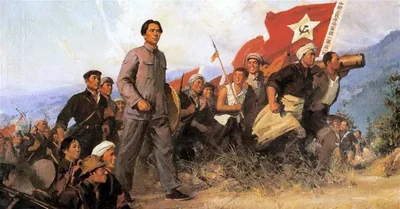
A national DSA caucus.
caucus site · source
libertarian socialist

Since 2017, the Libertarian Socialist Caucus (LSC) has united various libertarian socialists within DSA, including anarchists, libertarian Marxists, communalists, and Dutch-German left-communists. The caucus emphasizes a dual power framework that prioritizes “base building” in the form of campaigns to build militant labor and tenant unions, cooperatives, mutual aid societies, protests and direct action, and other democratic organizing.
LSC advocates for direct democracy, horizontal structure, and decentralization, as well as stricter elected discipline and anti-Zionism. This is reflected in their decentralization proposals at the 2021 DSA National Convention, their work in Milwaukee with the Lead Free MKE campaign for replacing lead pipes in the city, and their participation in Cooperation Milwaukee for cooperative and union development.
At one point, LSC was by far the largest caucus in DSA, but its membership numbers declined dramatically in 2019. In 2022, former and current LSC members formed the Horizon Federation, an organization meant to unite libertarian socialists inside and outside of DSA while maintaining LSC as a caucus within DSA. LSC’s Marxist wing has ideological overlaps with the Communist Caucus and Emerge, with some dual-card members of Emerge.
Members of LSC often indicate their membership on social media with the black flag emoji (🏴), representing a common symbol of libertarian socialism. Part of the DSA left, LSC no longer has representation on the NPC or NCC, but members still hold leadership positions at the chapter-level and nationally in both DSA and YDSA at the time of this writing.
- Dual power framework prioritizing base building: militant labor/tenant unions, cooperatives, mutual aid, protests, direct action
- Advocates for direct democracy, horizontal structure, and decentralization
- Supports stricter elected discipline and anti-Zionism
- Engages in local campaigns such as Lead Free MKE and Cooperation Milwaukee
caucus site · source
orthodox Marxist
A relatively recent addition to DSA, Marxist Unity Group (MUG) was founded in 2021 in adherence with an orthodox Marxist and democratic centralist ideology with various inspirations, including the Second International, the Bolsheviks, revolutionary abolitionists, Kautsky pre-renegade, and the SPD’s Erfurt Programme.
The caucus’s primary plank is the overthrow of the current American constitutional order and the foundation of a new democratic socialist republic, with a majoritarian democratic system in its place. MUG is committed to an oppositional electoral strategy, aiming to build socialist legislative blocs, operating under the democratic discipline of DSA’s membership and program, that use elected office to build support for socialism while committing to the abolition of institutions which limit popular democracy such as the Senate, the Electoral College, the Supreme Court, and the independent presidency. At the same time, it supports building a broad party-movement, with tenant and labor unions, cultural associations, and other independent working class organizations operating in the orbit of a socialist party. While MUG calls for democratic centralist unity of action around a socialist party structure, it also supports the construction of a distinctly socialist consciousness within unions and a dirty break from the Democratic Party.
MUG has been particularly vocal about its support for stricter elected discipline and its hard lines against Zionism and decentralization. The online publication Cosmonaut is associated with MUG, and the caucus also has strong relations with the UK publications Prometheus and Weekly Worker. Some of its members originated from the Marxist Center but its broad origins are diverse. On the NPC, it played a major role in opening the National Electoral Commission to mass membership, put forward the initial proposal for DSA to endorse protests against the Democratic National Convention, and supported the No Votes for Genocide movement in the 2024 Presidential election.
Members of MUG often indicate their membership on social media with a mug emoji (🍻 or 🍺), or the blue book emoji (📘), representing their book, Fight the Constitution: For a Democratic Socialist Republic, which describes the caucus’s politics in greater detail. MUG is on the DSA left and occupies 2 NPC seats and 1 NCC seat.
- Abolish the Senate, Electoral College, Supreme Court, and independent presidency in favor of a majoritarian democratic system.
- Pursue an oppositional electoral strategy to build socialist legislative blocs under democratic discipline.
- Build a broad party-movement with tenant and labor unions and other working-class organizations around a socialist party.
- Support a dirty break from the Democratic Party and the development of socialist consciousness in unions.
- Advocate stricter elected discipline and take hard lines against Zionism and decentralization.
- Supported the No Votes for Genocide movement in the 2024 Presidential election.
caucus site · source
right-wing of DSA
The Mass Action Caucus (MAC), locally named the Red Clover Caucus, was a caucus active from 2022 to 2024, unique for its platform for realignment of the Progressive Party in Vermont. MAC pursued an electoral vision that departed from both SMC and Tempest in their respective aims for very loose and very strict endorsement standards, reflecting an outlook that more closely resembled that of Groundwork or the more moderate wing of BnR. The caucus revived CVDSA from previous collapse by reactivating an initial core of socialist organizers around its platform, and formed the UVM YDSA chapter.
The caucus became defunct due to lack of interest, with many members joining Groundwork. Though its short lifespan makes it challenging to precisely classify, it is often thought as part of the right-wing of DSA, particularly due to its members’ subsequent affiliations.
- Realignment of the Progressive Party in Vermont
- Electoral strategy distinct from both loose (SMC) and strict (Tempest) endorsement standards
- Moderate approach similar to Groundwork or the moderate wing of Build and Root
- Revival of CVDSA through a core of socialist organizers
- Formation of the UVM YDSA chapter
source
revolutionary socialist
The Mass Work Caucus is a revolutionary socialist caucus, established in Twin Cities DSA, in November 2024. While the caucus is still in its incipient stages, its Points of Unity indicate uncompromising support for de-siloization of distinct areas of struggle within DSA, grounding electoral and labor work in a mass communist struggle, and promoting degrowth, self-determination, and decolonization as core elements of their ideology. They additionally express support for “immediate … organiz[ing] for an explicit break from the Democratic Party” in favor of a communist party of the working class. Mass Work is on the DSA left, but its precise role has yet to be seen.
- De-siloization of distinct areas of struggle within DSA
- Grounding electoral and labor work in a mass communist struggle
- Promoting degrowth, self-determination, and decolonization
- Organizing for an explicit break from the Democratic Party
- Support for a communist party of the working class
source
social democratic / progressive liberal
North Star (NS) is a small national caucus created in 2018, descending from the Unity Through Diversity Slate (2017) and the pre-2016 Harringtonite popular front consensus. As a result, North Star typically aligns itself with social democratic or progressive liberal organizations.
The caucus strongly advocates for realignment and popular front strategies, seeing them as the most pragmatic route to socialism. North Star is controversial among other caucuses, including more moderate ones, because of its defense of elected officials’ votes to break the 2022 rail strike and to fund Israel’s Iron Dome, its strong support of liberal candidates, perceived hostility toward other members on its official accounts, its critique of anti-Zionist slogans, and its nebulous positions on international issues.
Although it is often stereotyped as consisting of mostly older members following a very reformist and especially electoral program, the caucus claims to have no particular line. It is also skeptical of the existence of caucuses within DSA, finding them to create excessive divisions or to house ultraleftist tendencies. North Star is the most right-leaning caucus within DSA, clearly distinguishing itself from others on the DSA right, and has minimal involvement with YDSA.
- Advocates realignment and popular front strategies as pragmatic routes to socialism
- Strongly supports electoral politics and liberal candidates
- Defends elected officials' votes to break the 2022 rail strike and fund Iron Dome
- Critiques anti-Zionist slogans and has nebulous positions on international issues
- Skeptical of caucuses within DSA, seeing them as divisive or ultraleftist
caucus site · source
multi-tendency Marxist (including Trotskyist, De Leonist, Maoist, and Marxist–Leninist)
Red Labor was a small Boise-based caucus that was formed in 2020 and dissolved in late 2024. The caucus was relatively unique in its urge for a clean break from the Democratic Party and the immediate creation of a new socialist party, including active efforts to do so in Idaho. Red Labor believed in strong democratic centralism with critiques remaining internal in order to foster socialist unity. Members of Red Labor included Trotskyists, De Leonists, Maoists, and Marxist–Leninists. They did not hold any NPC or NCC seats, but they did have a notable presence in Boise DSA and Boise State YDSA.
The caucus voted to disband in late 2024 as they had decided against continuing to organize as an independent caucus. According to former leadership, significant segments of Red Labor will be joining adjacent caucuses or remain uncaucused in the immediate term; but many former members maintain a commitment to moving as a bloc in the future.
- Clean break from the Democratic Party
- Immediate creation of a new socialist party
- Strong democratic centralism with critiques remaining internal
- Fostering socialist unity
- Active efforts to build a new socialist party in Idaho
source
revolutionary Marxist
Red Line is a small East Coast coalition of revolutionary Marxists in DSA, including members with and without caucus affiliations, and seeks to support revolutionary socialists broadly in internal DSA elections, regardless of tendency (including non-Marxists, such as anarchists). It primarily seeks to build a militant labor movement and an independent socialist party via dirty or clean break, explicitly denouncing the realignment strategy. The group formed in 2023 and recently put on a call for DSA chapters to use Single Transferable Vote to elect delegates to the National Convention.
- Support revolutionary socialists in DSA internal elections regardless of tendency, including non-Marxists such as anarchists
- Build a militant labor movement
- Build an independent socialist party via dirty or clean break
- Denounce the realignment strategy
- Advocate for DSA chapters to use Single Transferable Vote for electing delegates to the National Convention
source
Marxist–Leninist

Red Star (RS) is a national Marxist–Leninist caucus, formerly limited to San Francisco, that formed in 2019. Red Star members previously classified themselves simply as scientific socialists and revolutionary Marxists, but more recently they have formulated more explicit politics around Marxism–Leninism.
Red Star is the direct successor of Refoundation (2017) in San Francisco, with a small but notable segment of members coming from the Collective Power Network (2019 to 2021). They are generally considered to be on the DSA left but have also had major disagreements with other left factions over issues such as budget cuts and staff layoffs in 2024. Red Star opposes both horizontalism and autocracy, advocating for big tent socialist organizing with a central pole agitating for revolutionary Marxism within a democratic workers’ party. The caucus supports strong elected discipline under a party surrogate model while explicitly opposing third campism. Red Star members tend to be more favorable toward “Actually Existing Socialist” states than other caucuses.
San Francisco DSA has seen significant Red Star involvement in various campaigns, such as the push for a vacancy tax and for the unionization of Anchor Brewing. Red Star also initiated the Good Governance Pledge in 2023 through which various factions pledged for transparency, accountability, democratic conduct, and behavioral discipline. Their publication, Zenith, is where Red Star members often share their perspectives on DSA issues and where the caucus may publish its position statements.
Red Star claims 3 out of 17 seats on the NPC, including one of the DSA co-chairs.
- Opposes horizontalism and autocracy
- Advocates big-tent socialist organizing with a central pole agitating for revolutionary Marxism within a democratic workers' party
- Supports strong elected discipline under a party surrogate model
- Explicitly opposes third campism
- Favorable toward 'Actually Existing Socialist' states
caucus site · source
Trotskyist (Grantite tendency)

Reform and Revolution (R&R or RnR) is a Trotskyist caucus formed in 2019 by former members of Socialist Alternative, the largest Trotskyist party in the US, who defected due to perceived sectarianism. Like SAlt, R&R is related to the Grantite tendency within Trotskyism but it also makes notable departures.
The caucus emphasizes a dirty break from the Democratic Party to form a new socialist party, as well as a rank-and-file labor strategy, democratic central planning of the economy, some third campist positions, and transitional politics. Unlike BnR, R&R continues to follow a clearly Trotskyist line today, although it diverges from Socialist Alternative in supporting rank-and-file organizing over red unionism, declaring support for a one-state solution in Palestine, not practicing democratic centralism, supporting a dirty break rather than a clean break, and conditional favorability toward AOC. R&R notably opposes military aid to Ukraine, unlike Solidarity and similar Trotskyist tendencies, as well as US sanctions on Russia, unlike BnR. Its members have been involved in the Seattle campaigns for Kshama Sawant and the $15 minimum wage. R&R’s dominant politics most closely resemble BnR’s left, but they also have strong relations with MUG particularly due to some shared perspectives around party building. R&R has relative internal diversity compared to many other caucuses, as its minority “old guard” and majority “new guard” often hold distinct views, such as on the precise details of their perspectives on elected discipline and Palestine, with the former perhaps being more moderate.
R&R members often use a box emoji (📦) on social media to identify themselves as part of the “Trot box,” a reference to Red Star’s 2023 NPC endorsement graphic which grouped MUG, BnR, and R&R—all of which have some degree of Trotskyist influence—together under “party building.” R&R is generally considered to be on the DSA left but less so than other left caucuses, as it tends to align with BnR on internationalism and holds a more moderate stance on elected discipline and internally-oriented anti-Zionist resolutions. The caucus has seen significant recent growth in both DSA and YDSA, recently gaining an NCC seat in YDSA.
- Dirty break from the Democratic Party to build a new socialist party
- Rank-and-file labor strategy over red unionism
- Democratic central planning of the economy
- Third campist positions and transitional politics
- Opposition to military aid to Ukraine and US sanctions on Russia
- Support for a one-state solution in Palestine
caucus site · source
Trotskyist (Grantite tradition)
Socialist Alternative (SAlt) is a Trotskyist international in the Grantite tradition with a section in the United States and is the largest Trotskyist party in the country. While it has existed since 1998, it began openly entering into DSA around 2020 in an attempt to expand favorability toward Trotskyism broadly and push DSA toward a clean break from the Democrats. It has been especially vocal for elected discipline within DSA but since 2023 has gone largely quiet. Socialist Alternative is likely the largest instance of entryism into DSA, albeit other Trotskyist parties have attempted to do the same with much less success. SAlt is on the DSA left, but appears to be fading into obscurity within DSA, especially after a recent major split that included its most high-profile member, former Seattle Councilwoman and dual-card DSA member Kshama Sawant, due to internal conflict over organizational democracy and various political issues.
- Push DSA toward a clean break from the Democratic Party
- Advocate for elected discipline within DSA
- Expand favorability toward Trotskyism broadly
source
reformist democratic socialism
Socialist Majority Caucus (SMC) is a moderate and reformist caucus focused on electoral organizing since 2018. SMC is aligned somewhere between a party surrogate and realignment strategy, and supports a slightly looser discipline of elected officials than Groundwork. Likewise, SMC was also part of the former governing coalition in the NPC for most of the 2021-2023 term.
SMC is generally aligned with Groundwork on most issues, the primary distinction being that SMC focuses less on Green New Deal legislation in its actual organizing. Most of its activity involves canvassing and phonebanking for DSA-endorsed candidates for public office, seeing a reformist focus as the most practical route to moving toward socialism today and bringing mass appeal to DSA via electoral representation. SMC represents 2 out of 17 seats on the NPC and is on the DSA right.
Tempest Collective
The Tempest Collective largely descends from former members of the International Socialist Organization (ISO) and Solidarity, similar to BnR. Tempest is a Trotskyist publication with a focus on rank-and-file labor organizing, elected discipline, and third campist internationalism. While most members now work outside DSA, their presence was once strong in the Madison DSA chapter.
- Focus on electoral organizing and supporting DSA-endorsed candidates through canvassing and phonebanking
- Supports a slightly looser discipline of elected officials compared to Groundwork
- Less emphasis on Green New Deal legislation compared to Groundwork
- Sees reformist electoral focus as the most practical way to move toward socialism and build mass appeal
caucus site · source
Marxist
The Winter Caucus is a minor caucus that consists largely of former members of the Class Unity Caucus. The caucus favors Marxism but strongly opposes “identity politics.” The caucus believes in the primacy of class over other struggles in socialist organizing and has called for a moratorium on federal endorsements until DSA can build strong mechanisms of elected discipline.
The Winter Caucus is vocally in favor of a dirty break from the Democratic Party. They are considered part of the DSA left but differ from most caucuses in their opposition to intersectionality as a legal theory and a “shorthand for placing all forms of oppression on an equal plane as class exploitation.” In particular, they see this understanding of intersectionality as divisive to the working class or in conflict with Marxism. Winter Caucus members are identifiable by the snowflake emoji (❄️) on social media. The Winter Caucus has some activity in DSA and YDSA, but it is not currently as influential as its predecessor.
Notable issues and events within DSA and YDSA
- Favors Marxism and class-based organizing
- Opposes identity politics and intersectionality as divisive to the working class
- Calls for a moratorium on federal endorsements until DSA builds mechanisms of elected discipline
- Advocates for a dirty break from the Democratic Party
source
Strategy
BDSstrategy
Since its 2017 National Convention, DSA has supported the Boycott, Divestment and Sanctions (BDS) movement, which calls for a consumer boycott of Israeli products and companies which support the oppression of Palestinians; divestment from endowments and investment portfolios containing the same; and political, economic, and cultural sanctions on the Zionist entity and its institutions.
source
Business unionism refers to concessionary, non-militant labor organizing as exemplified by ‘labor-management partnerships,’ quick willingness to avoid strike activity regardless of situation, or weak workplace demands or orientation toward class struggle organizing.
source
Campism focuses specifically on Western imperialism as the primary threat to global peace and liberation while arguing that the actions of other states are at least not currently relevant to American socialists. Campists may also argue that third campism inadvertently serves to support Western imperialism. While this term has historically carried negative connotations, it has become more of a reclaimed descriptor in recent years.
source
The clean break strategy advocates for DSA to immediately and completely break from the Democratic Party and exclusively use a third-party or independent ballot line instead. Supporters of the clean break strategy argue that any electoral campaigns done via the Democratic Party ballot line are very difficult or impossible to beget authentic working-class independence and committed socialist politics in government.
source
Degrowth refers to an ecosocialist perspective that is sometimes positioned in contrast to the “Green New Deal” and seeks to intentionally reduce unnecessary or wasteful economic production and consumption. This is meant to ultimately bring about a decline in faulty metrics like GDP in order to prevent climate catastrophe and improve quality of life for the majority of people. This perspective does not necessarily center on public policy, but rather a broad range of organizing, including direct action, participatory democracy, and “anti-work” changes toward alternative economies, worker and community ownership, and a cultural shift away from “economic growth” as an indicator of prosperity and quality of life. The degrowth perspective is adopted by some, but not all, DSA “left” caucuses, and is part of the official position of YDSA.
source
Some in DSA who are more favorable to degrowth politics have pointed to the stalling of the BPRA’s implementation as evidence of legislative campaigns not being the ideal praxis for ecosocialist organizing, instead favoring the construction of counterpower infrastructure outside of the capitalist state in hopes of more revolutionary changes in the long-run.
source
The dirty break strategy is the dominant position in DSA on the party question, which adopts a strategic use of the Democratic Party ballot line only in the short term due to the prevailing political conditions which typically preclude third party candidates from winning elections. However, the ultimate goal is still to build the independent infrastructure and resources for an effective independent socialist party.
source
As the DSA 100k Recruitment Drive passed without the organization reaching 100k financial or constitutional members, signs of membership decline were beginning to show in 2021.
source
Overall, the DSA left generally favored cuts to staff, which had by far become the largest expense over the previous couple of years, rather than cuts to other spending such as dues shares to chapters, stipends for elected leadership, subsidies for YDSA, and other spending.
source
On the other hand, the DSA right generally aligned with the DSA Union in attempting to minimize layoffs as much as possible by prioritizing cuts to other spending.
source
The dual power or “base building” approach is primarily adopted by libertarian socialists and rejects the party question as a priority, instead seeing building “counterpower” outside the state as the best route to challenging capitalism. This may include building independent democratic structures for labor, tenant, co-op, council, direct action, and protest organizing. While those who reject dual power or base building frequently support these activities as well, the distinction here is that those who support these approaches tend to deprioritize or even entirely reject electoralism or the party model. Although “dual power” is a term which originates from Vladimir Lenin’s description of the February Revolution of 1917, when workers’ councils co-governed with the Russian Provisional Government, the term has been appropriated to describe this model of transition wherein counterpower institutions gradually build the leverage necessary to overthrow capitalism and possibly the state.
source
The dual power or “base building” approach is primarily adopted by libertarian socialists and rejects the party question as a priority, instead seeing building “counterpower” outside the state as the best route to challenging capitalism. This may include building independent democratic structures for labor, tenant, co-op, council, direct action, and protest organizing. While those who reject dual power or base building frequently support these activities as well, the distinction here is that those who support these approaches tend to deprioritize or even entirely reject electoralism or the party model. Although “dual power” is a term which originates from Vladimir Lenin’s description of the February Revolution of 1917, when workers’ councils co-governed with the Russian Provisional Government, the term has been appropriated to describe this model of transition wherein counterpower institutions gradually build the leverage necessary to overthrow capitalism and possibly the state.
source
Some factions are neither caucuses nor slates, instead simply being represented by entryist parties who otherwise operate as independent entities, such as Socialist Alternative.
source
Those more favorable to Green New Deal politics often see these setbacks as expected roadblocks that only call for continued BPRA organizing and pressure campaigns.
source
In the 2024 presidential election debate, those who supported a “lesser of two evils” voting strategy, in a strategy aimed at defeating the right as a priority in its own right.
source
There were major debates between those who supported a “lesser of two evils” voting strategy, in a strategy aimed at defeating the right as a priority in its own right; and those who supported third party candidates as protest votes against both Kamala Harris and Donald Trump’s genocidal policies in Palestine, in a strategy aimed at building leverage for the Harris campaign to commit to an arms embargo on Israel.
source
YDSA and several DSA chapters committed to “No Votes for Genocide,” although the debate between lesser evil voting and third party voting remains contentious within DSA and YDSA. While YDSA endorsed “No Votes for Genocide” and opposition to voting for either of the major presidential candidates, DSA ultimately maintained no official position on voting strategy in the 2024 elections beyond their candidate and ballot measure endorsements, and expressed strong opposition to both parties’ genocidal politics.
source
Typically, anti-Zionists favor a one-state solution (1SS) or one democratic state (ODS), wherein the Israeli occupation of Palestine is resolved with a single, multinational, democratic state spanning “from the [Jordan] River to the [Mediterranean] Sea,” i.e., all of historic Palestine. This does not refer to the Zionist one-state solution, which seeks to have a Jewish ethnostate in at least all of historic Palestine, usually also including the Golan Heights and, in its most extreme form, wide swaths of the Levant and Middle East. Proponents of the one-state solution typically argue that the two-state solution is either no longer viable or was never viable due to Israel’s continued occupation and settlement of the West Bank and Gaza or by pointing to the explicitly stated motive, since the early days of the Zionist movement, to establish a Jewish ethnostate in historic Palestine through colonization and ethnic cleansing.
source
The new NPC Treasurer organized weekly meetings for the Budget & Finance Committee and openly shared all of DSA’s financial data for the first time with the Open Budgeting Proposal.
source
The party surrogate strategy is a variation of the dirty break strategy, wherein DSA operates as a faction within the Democratic Party. This approach focuses on cultivating elected discipline (i.e., political discipline of Socialists in Office) and independent infrastructure, with the aim of this faction of the Democratic Party becoming an independent socialist party.
source
One of two votes won or lost by just a single vote out of about 160 delegates. R15: No Votes for Genocide passed.
source
One of two votes won or lost by just a single vote out of about 160 delegates. R22: Class Struggle Internationalism failed.
source
The rank-and-file strategy involves socialist organizers entering the labor movement as shop-floor workers rather than union staff with an orientation toward class struggle and radicalization through experience. This approach focuses on agitating for militant activity against bosses and concessionary union bureaucracies, democratizing labor unions, and developing organic labor leaders from the rank-and-file. The rank-and-file strategy is dominant in DSA, with other models having minority support.
source
The realignment strategy involves working within the Democratic Party for an extended period of time with the goal of shifting the party to the left. Generally, this means pushing for the Democratic Party to adopt more social democratic or socialist principles, enabling socialist politics to eventually prevail within the party. Supporters of the realignment strategy usually prefer less restrictive elected discipline, and may refer to the strategy as more in line with “mass politics.”
source
Red unionism refers to union organizing with exclusively socialist leadership.
source
A major floor resolution titled ‘Rise Up For Rashida’ was proposed only minutes after President Joe Biden’s announcement that he would drop out of the presidential race, which called on DSA-endorsed elected Rashida Tlaib to symbolically run for the Democratic presidential nomination, but in the long run aimed at encouraging YDSA and DSA to develop plans for platforming socialist politics in the 2028 presidential election.
source
Across many DSA chapters, organizing such as salting key workplaces – whether to form new, militant unions or to radicalize existing ones via democratic reform – is a major priority, with the goal being to build institutions that can build working-class power and increasingly challenge capitalism. To some extent, DSA members have salted workplaces such as Amazon, Starbucks, public schools, and others across the country with these goals in mind.
source
The rank-and-file strategy is distinguished from staff-centered models, in which labor union staff drive the organizing rather than the workers themselves.
source
Several YDSA chapters across the United States have also worked to develop undergraduate unions at their universities over the last couple of years. One of particular note is the University of Oregon YDSA chapter, which won the largest undergraduate workers’ union in the United States in October 2023 with 97% of the vote, covering more than 4,900 student workers in a wall-to-wall campaign.
source
Third campism refers to an internationalist perspective originally rooted in the perspective of Trotskyist groups influenced by Max Shachtman. Shachtman opposed both the capitalist “first camp” and the Stalinist “second camp,” instead purporting to be in favor of the international proletariat “third camp.” Historically, third campists, unlike orthodox Trotskyists, have not been defenders of the then-existing “workers’ states.” Since the fall of the Soviet Union in 1991, this view has typically referred to simultaneous opposition to the Western “first camp” as represented by the US, Western Europe, Israel, and their allies, as well as the non-Western “second camp” as represented by China, Russia, Iran, and their allies.
source
Those who supported third party candidates as protest votes against both Kamala Harris and Donald Trump’s genocidal policies in Palestine, in a strategy aimed at building leverage for the Harris campaign to commit to an arms embargo on Israel. In particular, third party candidates often discussed among third party voters in DSA included Jill Stein of the Green Party, Cornel West of the Justice for All Party (and a longtime member of DSA), and Claudia De la Cruz of the Party for Socialism and Liberation.
source
The official state position in the U.S. is a two-state solution (2SS) wherein the Israeli occupation is resolved by establishing two separate states, typically along the lines of the current UN-recognized borders of Israel and Palestine. Supporters of a 2SS see it as either a valid compromise or the only possible solution in which the Zionist state maintains its existence. In order for this to happen, Zionists still must completely de-occupy the West Bank, Gaza, and the Golan Heights—a move that U.S. politicians have largely done nothing to encourage Israel towards—and end internal apartheid. This view is more common among DSA members who are relatively less engaged in the broader organization, as well as among members who were part of DSA prior to 2016, influenced by founder Michael Harrington. Additionally, party members of Socialist Alternative and the old guard of the Reform and Revolution caucus officially support a 2SS. It is disputed whether the two-state solution represents an anti-Zionist or merely a non-Zionist perspective in the context of pro-Palestine organizing.
source
DSA endorsed “Uncommitted” for the Democratic presidential primary, alongside on-the-ground organizing for Palestinian liberation, ultimately seeing substantial protest votes.
source
Terms
The process of destroying oppressive systems such as prisons and police, often seen as necessary to build a better world and achieve socialism.
source
It should be noted that the Afrosocialists “Caucus” is a misnomer, in fact being an official national working group including all people of color in a variety of caucuses.
source
Anti-Zionism is DSA’s position on the Palestine question, wherein Zionism is recognized as a colonial and racist ideology that enables “Israel” to exist as an apartheid regime built on ethnic cleansing and genocide. Anti-Zionists completely reject arguments regarding Israel’s “right to exist” or to “defend itself” as they see it as an illegitimate entity, particularly in the context of its foundation as an explicitly settler colonial project and its continued oppression of the Palestinian people and other Arabs. Since its 2017 National Convention, DSA has supported the Boycott, Divestment and Sanctions (BDS) movement.
source
A group of members organized around a shared interest.
source
A system where candidates for a governing body are elected by the entire jurisdiction, rather than by smaller districts.
source
A labor and tenant organizing strategy that emphasizes creating organized groups capable of forming a base for socialist politics.
source
Since its 2017 National Convention, DSA has supported the Boycott, Divestment and Sanctions (BDS) movement, which calls for a consumer boycott of Israeli products and companies which support the oppression of Palestinians; divestment from endowments and investment portfolios containing the same; and political, economic, and cultural sanctions on the Zionist entity and its institutions.
source
The controversy reached a climax in March 2022, when the NPC narrowly voted to de-charter the national BDS Working Group and temporarily ban its leadership from other positions due to accusations of disruptive and uncomradely behavior, a decision later reversed after substantial backlash from members and other leftist and Palestinian liberation organizations.
source
The right to make decisions about your own body, life, and future, without coercion or violence.
source
The class of business owners and wealthy people who own the means of production and rely on the exploitation of the working class.
source
A Palestinian-led movement for freedom, justice, and equality, aiming to end Israeli apartheid and decolonize Palestine through boycotts, divestment, and sanctions.
source
Some chapters have branches which are subsections within the chapter, designed to give special attention and structure to the organizing priorities of and issues facing certain geographic regions within a broader chapter.
source
The new NPC Treasurer organized weekly meetings for the Budget & Finance Committee and openly shared all of DSA’s financial data for the first time with the Open Budgeting Proposal. In its December meetings, the Budget & Finance Committee deferred several large items to the NPC. Items put on the table included cutting dues share, permanently closing the national office, ending Democratic Left, cutting the National Harassment and Grievance Officer early, cutting member-organizing funds, a travel freeze, ending all in-person meetings, and a hiring freeze. Budget & Finance cut $268,000 of items and deferred the larger items to the NPC due to the nature of the impact.
source
After four years of leadership by DSA chapters in New York state, the Build Public Renewables Act (BPRA) successfully passed as the largest and most prominent public renewable energy legislative victory in U.S. history. With strong provisions for rapidly expanding publicly-owned renewable electricity, unionized public jobs, electricity price discounts, and closures of fossil fuel plants, the BPRA campaign was initiated and led by New York DSA chapters (and coordinated with elected DSA officials in the state legislature through Socialists in Office committee activity). It demonstrated perhaps the most significant ecological legislative victory in the U.S. socialist movement. The BPRA ultimately passed in 2023, giving the New York Power Authority much stronger requirements to build public renewables and close fossil fuel plants when private electricity companies inevitably fail to keep up with aggressive climate goals. The campaign also provided decent public union jobs.
source
A group of people trained for a specific purpose, well-educated in and committed to a movement’s beliefs and activities, and able to train others.
source
A series of efforts to bring about a desired result. In DSA, campaigns are groups working together to achieve a specific goal.
source
Activism that seeks political support by directly contacting people, typically by going door-to-door in neighborhoods.
source
A way of running the economy where a few people in the nation own the stores, transportation systems, services, finance, and business and the majority of the people work for those owners. The few capitalists make large amounts of money by selling what the rest of the people make – like housing, technology, services, cars, or oil. This is called profit. The final outcome of capitalism is the destruction of the land and the planet’s ecosystems.
source
Caucuses are informal factions of DSA members, typically with a particular ideological tendency, theory of organizing, or political priority. Some smaller caucuses may also distinguish themselves by their geographic region. Caucuses coordinate events among their members, promote their theories of change within the organization, make proposals aligned with their specific platforms at conventions and on national bodies, and run national body candidates.
source
These are local semi-autonomous formations in which DSA members carry out the bulk of the organization’s labor, tenant, housing, electoral, reproductive justice, internationalist and other organizing. Chapters are typically independently incorporated but, as part of the national organization’s federated structure, are officially recognized sections and rarely have their own staff like national DSA does.
source
The social group that an individual belongs to, all of whom make their living the same way. For instance, working people make their living by working for someone. The petty bourgeois make their living by working for themselves as well as making money off of other people’s labor. The bourgeois make their money only off of the labor of everyone else, which we call exploitation. The bourgeois don’t work at all. They make others work and call that work. The white ruling class in the United States is bourgeois.
source
The belief that all forms of oppression will be resolved through a worker-dominated state, dismissing other identities and oppressions.
source
An electoral strategy of leaving the Democratic Party now and running candidates as independents or under a DSA ballot line.
source
The process by which employees, usually through a union, negotiate with their employer to determine terms and conditions of employment.
source
The DSA Staff Union’s collective bargaining agreement (CBA) was finalized, approving a $2,000 raise for all staff. CBA-aligned layoffs were part of the cost reductions.
source
A group within a DSA chapter tasked with carrying out an internal function for the chapter.
source
Political ideology derived by Karl Marx. It is a form of socialism that is characterized by common ownership of the means of production rather than private property.
source
A grouping of resolutions expected to pass, voted on in one motion to save time. Inclusion or exclusion can be contentious.
source
A party or group that appears as an opposition but is ineffective, allowing the ruling parties to control the political environment.
source
Convention is the biannual organization-wide event for which delegates are elected by each DSA chapter to attend and vote on the future direction of the organization as a whole. This is the highest decision-making body in DSA, given more power than all other structures in the organization. YDSA also has a convention that is held annually for the youth wing of the organization.
source
Media and public relations that promote a positive image of police while minimizing abuses of power.
source
Hot-button issues selected and amplified by corporate media to increase social division and political polarization.
source
In campaign strategy, the specific outcome you want to win; the more specific the better.
source
A system of government where laws, leaders, and policies are decided by the people.
source
A practice in which political decisions reached by voting processes are binding upon all members of the political party. DSA bylaws allow for the expulsion of a member ‘under the discipline of any self-defined democratic-centralist organization.’ This seems to have been against destructive entryism, but could in theory apply to some Leninist caucuses in DSA, though it has never been enforced. As a result, several caucuses have suggested enforcing or deleting this clause (depending on their politics).
source
Items put on the table included cutting the National Harassment and Grievance Officer early, cutting member-organizing funds, a travel freeze, ending all in-person meetings, and a hiring freeze. The NPC cut an additional $273k which included Democratic Left, all non-YDSA stipends, 14.5% of DSA Co-Chairs’ wages, and some national committee funds.
source
During the founding merger of DSA between the Democratic Socialist Organizing Committee (DSOC) and the New American Movement (NAM), it was discovered that DSOC was 1 million dollars in debt.
source
A term popularized by Marx and Engels describing material conditions, especially economics, as the primary drivers of social and cultural change.
source
A dialogue between opposing viewpoints to arrive at a common truth through reasoned argument.
source
An electoral strategy of working within the Democratic Party for now while building capacity to break away and form an independent party later.
source
A description of the current situation in DSA where the organization uses Democratic ballot lines without seeking to transform the party or create a new one.
source
The exploitation of crises by governments and corporations to push policies that benefit the wealthy at the expense of the population.
source
The NPC cut 14.5% of DSA Co-Chairs’ wages as part of the budget reductions.
source
The YDSA Conventions have no direct effect on DSA, apart from the YDSA co-chairs each having a half vote on the 17-seat NPC. The NPC thus remains largely unchanged from prior to the 2024 YDSA Convention, with a half seat which was formerly independent having been replaced by a BnR half seat. Notably, due to Bread and Roses being the median member of the NPC, they often have disproportionate influence during the current term. However, Red Star has sometimes played this role instead when it comes to budget-related issues.
source
Concerns about DSA’s finances had been regularly reported by rank and file DSA members across tendencies via the DSA Observer (2021).
source
During this time, the DSA Staff Union’s collective bargaining agreement (CBA) was finalized, approving a $2,000 raise for all staff. The DSA right generally aligned with the DSA Union in attempting to minimize layoffs as much as possible by prioritizing cuts to other spending.
source
The DSA Treasurer, part of the NPC, demonstrated through the most updated metrics available that the deficit was projected to reach such an unsustainable level that it would lead to the shutdown of the organization by 2025 unless further action was taken. The new NPC Treasurer organized weekly meetings for the Budget & Finance Committee and openly shared all of DSA’s financial data for the first time with the Open Budgeting Proposal.
source
Items put on the table included cutting dues share. The DSA left generally favored cuts to staff rather than cuts to other spending such as dues shares to chapters, stipends for elected leadership, subsidies for YDSA, and other spending.
source
A reduction of political or cultural phenomena and struggles to purely economic issues.
source
The effort began in late 2019 with the Public Power NY campaign by the ecosocialist working group of the New York City chapter of DSA.
source
As this violated DSA’s anti-Zionist and pro-BDS platform, these actions ignited strong debates about the role of elected discipline in the socialist movement, with many DSA members and the National Political Committee condemning Bowman’s actions and unendorsing him. Those on the DSA right often argued against strong immediate discipline due to Bowman’s large platform and in hopes of working with Bowman’s office to improve his positions on Palestine; on the other hand, the DSA left typically argued in favor of strong immediate discipline, potentially including expulsion from the organization, as a show of support for pro-Palestine solidarity and organizing and establishing standards for those representing DSA to the public.
source
A political tactic centered on voting and elections, from running candidates to consciousness-raising and pressuring others. There is debate about how much socialists should engage.
source
In the case of ETOC, it is a program under the DSA Housing Justice Commission for tenant organizing and training.
source
Other formations, such as the Emergency Worker Organizing Committee (EWOC) and Emergency Tenant Organizing Committee (ETOC) are managed by DSA members, but operate with some degree of autonomy. In the case of EWOC, it is an independent initiative for labor organizing and training managed by both DSA and United Electrical.
source
A coalition of DSA and the United Electrical, Radio and Machine Workers of America (UE) that provides grassroots organizing support for workers.
source
A tactic where an organization encourages its members to join another, usually larger, organization to expand influence.
source
A far-right, authoritarian ultranationalist political ideology and movement characterized by dictatorial power, forcible suppression of opposition, and strong regimentation of society and the economy.
source
A member empowered by their chapter to handle harassment reports in accordance with DSA’s Harassment Policy.
source
Immigration and Customs Enforcement, a repressive immigration enforcement agency that targets marginalized migrants through raids, detention, and deportation, reinforcing capitalist exploitation.
source
Operates as a repressive arm of the state, targeting marginalized migrants through raids, detention camps, and deportations. Its actions disrupt families, fuel racial terror, and reinforce capitalist exploitation by maintaining a vulnerable, undocumented workforce that employers can underpay and abuse. By collaborating with private prisons, militarizing borders, and violating human rights, ICE upholds a system of oppression that benefits corporations and the ruling class while harming working-class communities.
source
The practice of a nation seeking to extend their power and dominance beyond their borders, usually through occupation. It can also be done indirectly by exerting political, economic, or military power over another territory.
source
The DSA International Committee (IC) has engaged in notable international delegations, forming relationships with socialist and resistance groups globally. Alongside DSA’s membership in the São Paolo Forum and the Progressive International, these delegations and the IC’s work allow for socialist parties in other countries to have wide awareness of DSA and engage in mutually beneficial forms of international cooperation.
source
In a socialist sense, seeing your country’s class struggle as part of the global struggle of the working classes against ruling classes.
source
All earmarked fundraising was frozen with the exception of the Labor Solidarity Fund.
source
An organized association of workers seeking to protect workers from exploitation by ensuring rights, higher salaries, and better benefits.
source
Because DSA largely followed the politics of its founder Michael Harrington, until around 2016, outdated documents from DSA were often rife with allusions to “Israel’s right to exist,” a Zionist talking point, and a full rejection of anything outside of a two-state solution. Harrington’s labor Zionism dominated the organization until the organization grew past its historical 5,000-person membership rolls after 2016, as more diverse politics and typically younger socialists joined the organization en masse.
source
A political philosophy emphasizing individual rights, liberty, equality before the law, and private property, which is not considered leftist due to support for capitalism.
source
LSC is mentioned as one of the groups that failed to win YDSA NCC seats: ‘other independents as well as LSC and Groundwork failed to win NCC seats.’
source
One of the main ideologies of communist parties, including democratic centralism, dialectical materialism, a revolutionary horizon, and the vanguard party.
source
The concrete realities and power structures that affect people’s lives.
source
A philosophical approach to understanding the world according to the material conditions that shape people and societies. This is in contrast to idealism, where the world is understood through more spiritual forces or ideas.
source
A member of a DSA chapter who takes on leadership roles in campaigns or committees, usually requiring organizing experience and training.
source
A status that allows members to vote, run for officer or delegate positions. Requires dues payment or a waiver.
source
A system where supply and demand are controlled by a single party, making war mutually profitable for the ruling class and perpetuating imperialism.
source
Solidarity-based support where people come together to meet each other’s needs, as distinct from charity’s top-down approach.
source
By 1997, the National Director couldn’t give a financial report to the National Convention, leading to the creation of the Secretary-Treasurer role. DSA still had a looming issue, however, as the convention typically caused a large deficit -$500k during the years it was held.
source
A delegate chosen by a chapter to represent it at the national DSA convention. Chapters get one delegate per 75 members, plus alternates.
source
The National Coordinating Committee (NCC) is similar to the NPC but is specific to YDSA. This body is elected by YDSA National Convention delegates and consists of 9 seats, including two co-chairs and seven at-large. The NCC does not have a steering committee like that of the NPC.
source
By 1997, the National Director couldn’t give a financial report to the National Convention, leading to the creation of the Secretary-Treasurer role. By 2004, DSA could only fund 2 staff positions (National Director and Youth Organizer), and both of these positions had to go on unemployment assistance. DSA hired its longest tenured National Director in 2011, Maria Svart. During this time, both the Operations Director and National Director resigned, and two other staff members were promoted to Operations Director and Finance Director, respectively.
source
Items put on the table included cutting the National Harassment and Grievance Officer early, and ending the NHGO contract early (alone costing $30k per month).
source
The DSA Treasurer, part of the NPC, demonstrated through the most updated metrics available that the deficit was projected to reach such an unsustainable level that it would lead to the shutdown of the organization by 2025 unless further action was taken. The 2023-2025 NPC set about examining the issues as DSA’s Finance Director resigned just before the 2023 convention. In its December meetings, the Budget & Finance Committee deferred several large items to the NPC. The NPC cut an additional $273k which included Democratic Left, all non-YDSA stipends, 14.5% of DSA Co-Chairs’ wages, and some national committee funds.
source
The National Political Committee (NPC) is the highest decision-making body in DSA outside the biannual conventions. This body is elected by convention delegates and consists of 17 seats, consisting of 16 elected at the DSA National Convention, and one shared by the two co-chairs of YDSA who are elected at the YDSA National Convention. Two of these members are then elected by convention delegates to serve as the national DSA co-chairs.
source
National working groups, committees, and commissions are national autonomous groups recognized by DSA which focus on organizing and mobilizing around specific issue areas, such as the International Committee, the Housing Justice Commission, the National Labor Commission, the Afrosocialists Caucus, the Queer Socialists Working Group, the Abolitionist Working Group, and more. There are currently more than a dozen of these in DSA, as well as others specific to YDSA.
source
During the founding merger of DSA between the Democratic Socialist Organizing Committee (DSOC) and the New American Movement (NAM), it was discovered that DSOC was 1 million dollars in debt.
source
Regular sessions held for new or prospective members to learn about DSA.
source
A campaign upholding DSA’s commitment to anti-zionism and solidarity with the people of Palestine, whose goal is to remove products that are produced by or in support of the Palestinian occupation in local businesses. Campaign activities include canvassing of businesses seeking pledges to not import or sell Israeli food products, and pressure campaigns to ensure that businesses which use/sell Israeli food products cease doing so. This action functions in parallel to the Boycott, Divest, and Sanctions (BDS) movement.
source
A charity-based non-profit entity that serves as an ineffective band-aid to social and economic problems caused by capitalism.
source
A private foundation that allows wealthy people to avoid taxes, and is beholden to its funders. All NGOs are nonprofits, but not all nonprofits are NGOs.
source
During this time, both the Operations Director and National Director resigned, and two other staff members were promoted to Operations Director and Finance Director, respectively. Three staff positions left vacant from this process were frozen.
source
A labor strategy emphasizing creation of new unions rather than working within existing ones, often targeting Black, immigrant, and low-wage workers to build revolutionary class consciousness.
source
The act of mobilizing people around a common goal to build collective power.
source
An electoral strategy where DSA operates as a faction within the Democratic Party with disciplined candidates, independent infrastructure, and a public persona.
source
Also known as petty bourgeoisie, a socioeconomic class of small-time capitalists like small shopkeepers and self-employed artisans.
source
A form of protest where workers and allies stand outside a business to discourage entry and draw attention to a cause.
source
A framework quantifying the degree to which human activity affects nine processes critical to Earth’s stability, defining safe operating space for humanity.
source
A chapter subcommittee dedicated to ongoing education around Marxist theory and supporting the advancement of the socialist movement.
source
The practice of making excessive profits on essential goods, especially during emergencies.
source
Alongside DSA’s membership in the São Paolo Forum and the Progressive International, these delegations and the IC’s work allow for socialist parties in other countries to have wide awareness of DSA and engage in mutually beneficial forms of international cooperation.
source
Social class of wage-earners who have no ownership over the means of production. Their only means of subsistence is to sell their labor power.
source
A written, formal document outlining the motivation and structure of an event, campaign, or other action to be taken by DSA members or groups of members.
source
A system where the electricity grid is owned and managed collectively by its customers and elected representatives, rather than by corporations.
source
The effort began in late 2019 with the Public Power NY campaign by the ecosocialist working group of the New York City chapter of DSA in response to rising electricity rates and declining electricity access by the private electricity provider ConEd. Public Power NY connected with the community through town halls and canvassing, finding a need for strengthened public utilities to replace private utilities—not just for higher quality service and environmental benefit, but even for economic efficiency and fiscal responsibility.
source
The minimum number of members who must be present at a meeting to make its proceedings valid.
source
A socially constructed category used to justify oppression and colonization, using physical characteristics to categorize people.
source
A position that forms in opposition to something and does not stand on its own, e.g., being anti-police violence but not pro-abolition.
source
Seeking to improve or change an existing system through avenues set in place by that system, believing enough change can bring a new system.
source
A formal proposal submitted for discussion and voting by a governing body or membership, often outlining a position, decision, or course of action.
source
A system of justice that focuses on repairing harm rather than punishing.
source
The ultimate goal of proletarian revolution: overthrowing capitalism and establishing a classless, communist society.
source
Parliamentary procedure used in DSA chapter meetings to facilitate democratic decision-making.
source
Alongside DSA’s membership in the São Paolo Forum and the Progressive International, these delegations and the IC’s work allow for socialist parties in other countries to have wide awareness of DSA and engage in mutually beneficial forms of international cooperation.
source
A derogatory term for a worker who crosses a picket line and continues working during a strike, undermining collective bargaining.
source
The application of scientific methods and analysis of economic and social conditions when organizing to overthrow capitalism.
source
By 1997, the National Director couldn’t give a financial report to the National Convention, leading to the creation of the Secretary-Treasurer role, later split into separate Secretary and Treasurer roles.
source
A group of DSA members organized around a shared identity.
source
Slates serve as similar formations, as they market certain candidates or ideological tendencies, but they do not have caucus-like structures with permanent members and activities.
source
An economic and political system where the means of production are owned and controlled, either publicly or collectively, rather than privately. The final outcome of socialism is the preservation of the land, the planet’s ecosystems, and the creation of communal society based on cooperation and care.
source
A not-for-profit organization dedicated to educating and advocating for self and community defense, including firearms, disaster relief, medicine, and other survival skills under capitalism.
source
The BPRA campaign was coordinated with elected DSA officials in the state legislature through Socialists in Office committee activity.
source
Supporting one another and other groups because your liberation is tied up with theirs. It’s not just expressing support, it’s doing support. It’s not just posting on social media, it’s showing up in whatever way you can at your capacity. It’s organizing together. It’s supporting each other’s organizing.
source
Others reacted by trying to increase dues amount per member, with monthly dues and income-based “Solidarity Dues,” alongside recommitment drives. An additional $400,000 dollars was added to the 2024 income largely from members switching to solidarity dues.
source
A queue of speakers in a meeting; members add themselves by saying ‘stack’.
source
As of the time this was published, there are 20 paid staff members of DSA who are hired by the NPC to carry out DSA’s democratically-decided national goals, as well as local chapters’ organizing. Staff are not meant to set the organization’s priorities, but instead to help the volunteer members of the NPC, NCC, working groups, commissions, and chapters in fulfilling their goals. Non-directive staff are unionized with the Communications Workers of America as the DSA Union.
source
Some chapters may also form state-wide formations to better coordinate amongst themselves, such as California DSA.
source
A national DSA committee of five members that makes decisions between NPC meetings and oversees organizational functions.
source
The Student Worker Alliance Network (SWAN) is an informal body run by socialist (largely YDSA) leadership as the “Student Workers Alliance,” but serves as a group for student labor union organizers inside and outside of YDSA and the socialist movement to connect and share skills.
source
In campaign strategy, the person or party with the power to give you what you want.
source
A political movement and caucus within the Republican Party that emerged in 2009, opposing taxation and government intervention while supporting stronger immigration controls.
source
Trans-exclusionary radical feminist: a bioessentialist feminist movement that rejects trans identities and reinforces a gender binary.
source
A bioessentialist feminist movement that is built on cis supremacy by rejecting trans identities and reinforcing the so-called gender binary.
source
When two parties start with opposing views but undergo a process that shifts their perspectives and allows new understanding of each other’s needs.
source
A framework for addressing harm that prioritizes healing, accountability, and community safety without relying on the state or reinforcing violence.
source
Actions by employers or unions that violate employee rights or labor laws, such as interfering with union organizing, and can be addressed by the NLRB.
source
The vanguard, or vanguard party, is something which is defined in Marxism-Leninism as the body which helps lead and guard the working class before, during, and after the revolution. This party is made up of people from the working class who are well educated in Communist theory and who understand that their main duty is to serve the interests of the working class (aka, vanguard party members are ‘cadre’).
source
Concerns about DSA’s finances had been regularly reported by rank and file DSA members across tendencies via the DSA Observer (2021) and the Washington Socialist (2023).
source
The process by which certain landscapes and their inhabitants are disproportionately exposed to environmental harm to support industrial lifeways elsewhere.
source
A type of feminism that focuses exclusively on middle/upper-class white able-bodied women, at the cost of other women, measuring success through wealth and superiority.
source
A worker-initiated strike without union leadership approval, often spontaneous.
source
A selection of members devoted to specific issues like electoral work, tenant organizing, political education, etc.
source
The DSA right generally aligned with the DSA Union in attempting to minimize layoffs as much as possible by prioritizing cuts to other spending such as dues shares to chapters, stipends for elected leadership, subsidies for YDSA, and other spending. The first round of cuts included a travel and event freeze including in-person YDSA conventions, and all non-YDSA stipends.
source
At the 2024 YDSA Convention, DSA’s youth section made several substantial changes to its stance on Palestine after nearly a year of many chapters putting themselves at the center of militant protests and encampment organizing, usually alongside organizations such as Students for Justice in Palestine and Jewish Voice for Peace. YDSA, in particular, has been widely involved in university-based encampment organizing to exert strong pressure on university administrators to divest from the Zionist state.
source
The ideology demanding a Jewish colonial ethnostate in the Middle East, often backed by evangelicals and corporations seeking profit.
source